

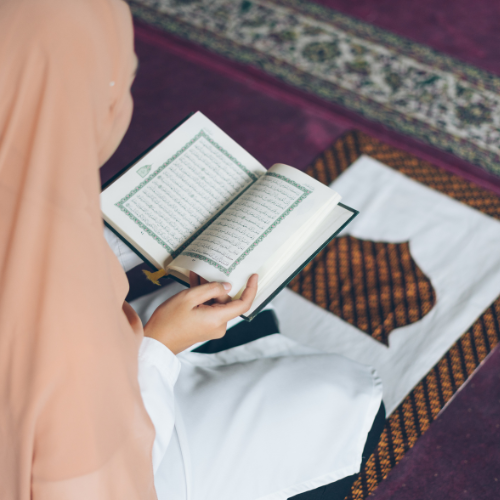
Understanding Women in the Quran: A Comprehensive Analysis
Introduction
In this article, we delve into the profound insights offered by the Quran regarding women, their rights, and their role in society. Our aim is to provide a comprehensive analysis that not only sheds light on the misconceptions surrounding women in Islam but also presents a balanced perspective rooted in the teachings of the Quran. By exploring the Quranic verses pertaining to women, we aim to contribute to a more accurate understanding of this important topic.
The Dignity and Equality of Women
The Quran emphasizes the intrinsic dignity and equality of men and women. It unequivocally declares that both genders possess equal worth in the sight of God. The Quranic verse 4:1 states, "O mankind, fear your Lord, who created you from one soul and created from it its mate and dispersed from both of them many men and women." This verse highlights the fundamental unity of humankind, recognizing that men and women are complementary counterparts.
Women's Rights in Marriage
Contrary to popular misconceptions, the Quran grants women numerous rights in the context of marriage. The principle of mutual consent is strongly emphasized, ensuring that women have a say in choosing their partners. Additionally, the Quran explicitly prohibits forced marriages and advocates for the consent and well-being of both spouses.
In Surah An-Nisa (4:34), a verse often misinterpreted, it is crucial to understand the context. It does not condone violence but rather provides guidance for addressing cases of marital discord as a last resort. Scholars interpret this verse as encouraging dialogue, mediation, and reconciliation, with any physical separation being a temporary measure aimed at restoring harmony within the marital relationship.
Women's Education and Empowerment
The Quran places great emphasis on education and intellectual growth for both men and women. It encourages seeking knowledge and advocates for women's empowerment through education. The famous verse 96:1-5 begins with the command, "Read! In the name of your Lord, who created." This divine injunction exemplifies the Quran's promotion of literacy and intellectual development.
Throughout Islamic history, countless women have excelled in various fields, including scholarship, medicine, and literature. From Aisha bint Abu Bakr, a renowned scholar and the wife of the Prophet Muhammad, to Fatima al-Fihri, the founder of the world's oldest existing university, the contributions of Muslim women throughout the centuries are a testament to the Quranic teachings that encourage women's participation and achievement.
Women's Economic Rights
The Quran advocates for women's economic independence and financial security. It recognizes their right to own and inherit property, engage in business transactions, and contribute to the economy. Verse 4:32 states, "And do not wish for that by which Allah has made some of you exceed others. For men is a share of what they have earned, and for women is a share of what they have earned." This verse highlights the equitable distribution of wealth and reinforces the notion of economic justice within Islamic principles.
Women's Social and Political Participation
Contrary to the perception that Islam discourages women's involvement in public life, the Quran encourages women to actively participate in society. The Prophet Muhammad's wives, known as the Mothers of the Believers, played instrumental roles in education, advocacy, and leadership within the early Muslim community. Their influential positions demonstrate the Quran's recognition of women's potential and their capacity to contribute significantly to the betterment of society.
Conclusion
In conclusion, a holistic understanding of the Quran reveals a profound appreciation for the rights and status of women. Islam, as depicted in the Quran, upholds their dignity, equality, and empowerment in various spheres of life. By dispelling misconceptions and highlighting the Quranic teachings, we aim to contribute to a more accurate and nuanced understanding of women in the Quran. It is important to approach this topic with an open mind and a willingness to explore the rich teachings of Islam in their entirety.
As we conclude this comprehensive analysis, it is essential to recognize that the Quran's teachings regarding women are rooted in justice, compassion, and equality. Islam, as exemplified in the Quran, emphasizes the value and rights of women in all aspects of life, including marriage, education, economics, and social participation. It is crucial to refer to authentic sources, engage with knowledgeable scholars, and promote dialogue that fosters understanding and harmony.